
Pilates, how does it work?
A method born 100 years ago
Pilates was created by Joseph Pilates, born in Germany in 1883. He called it “Contrology”: the art of controlling the body with the mind. During the First World War he fixed springs to beds so bedridden people could exercise: the ancestor of the Reformer.
After settling in New York in the 1920s, he taught his method to dancers, then to everyone. Today Pilates is practised worldwide, in rehabilitation as well as sports training.
At Feel Pilates, Alessia, founder and coach for over 20 years, wanted a studio on a human scale: small groups, machines for everyone, and coaches who correct every movement.

The 6 principles
They guide every exercise, on the mat or on a machine.
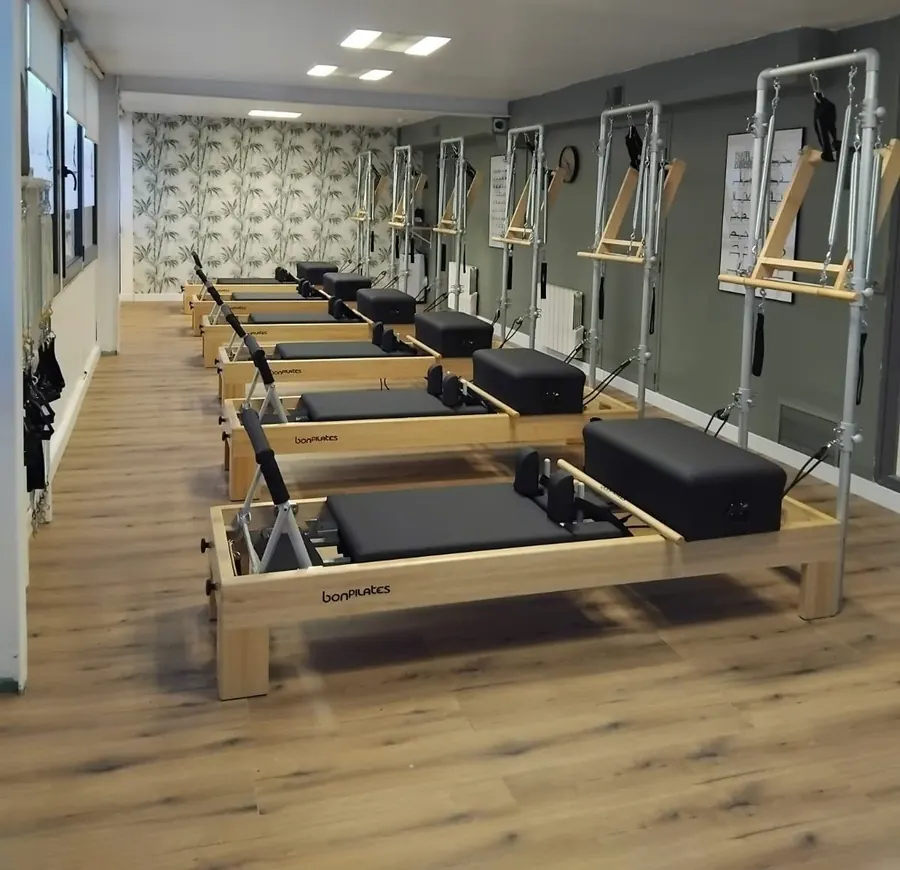
Why machines?
The springs of the Reformer, Tower or Chair can assist a movement or make it harder. Beginners are guided and supported; advanced students get more resistance.
Mat work remains the foundation of the method: you learn breathing and centring with body weight and a little small equipment. The two complement each other.
Which level should I pick?
Every class in the schedule shows its level. If in doubt, start with level 1: your coach will tell you when to move up.
To start, come back after a break or go over the basics. The coach explains every movement and how to set up the machines.
You know the basics and the machines. Sequences are longer and more dynamic.
For regular, experienced students: more demanding exercises at a steady pace.
Studio rules
A few simple rules so every class goes well for everyone.
- Arrive 5 to 10 minutes before class. After 10 minutes late, access is refused.
- Grip socks required on the machines (sold at the studio).
- Phone on silent during class.
- After class, wipe down and put away your equipment.
- Pain, injury or pregnancy? Tell the coach before you start.
- Free cancellation up to 24h before. Class full? Join the waiting list; you get an email if a spot opens. Also join our WhatsApp group for spots freed up at the last minute.
- Open to minors from age 13.